Kateryna Kasper

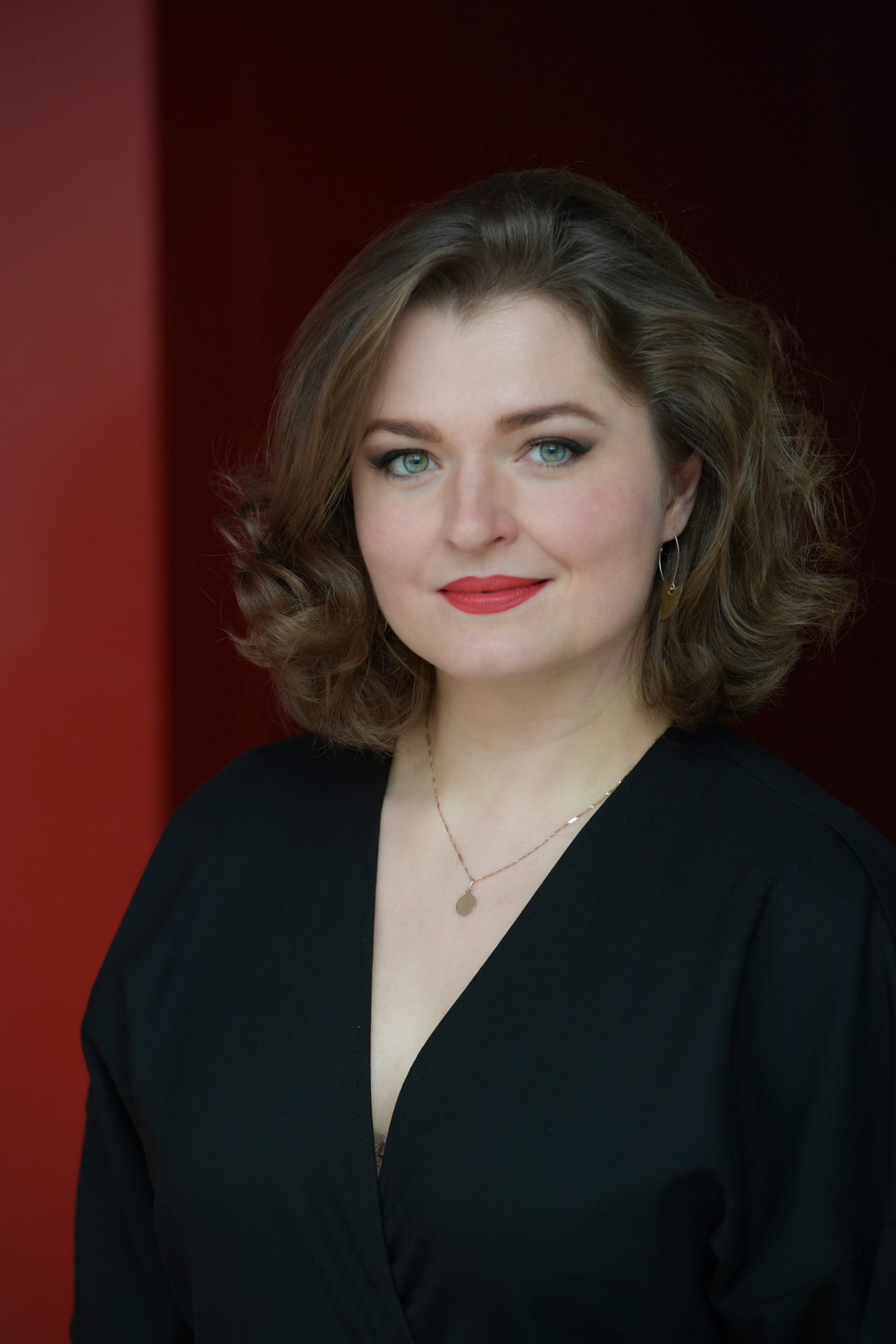
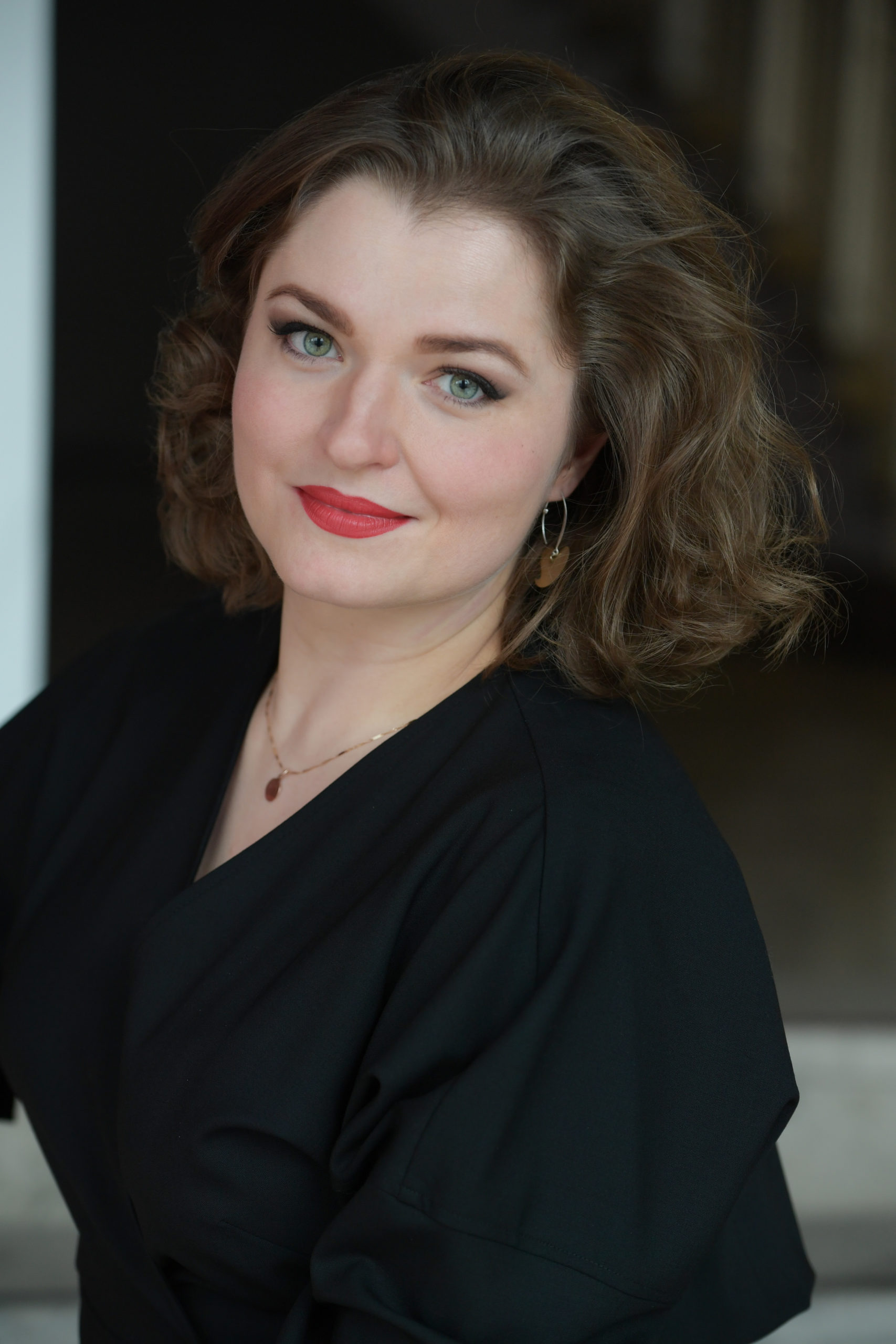
  • The Ukrainian-German soprano Kateryna Kasper is distinguished by her stylistic versatility in opera, oratorio, and song. She regularly performs at leading opera houses, concert halls, and festivals worldwide, and is known for her nuanced interpretations and expressive range.

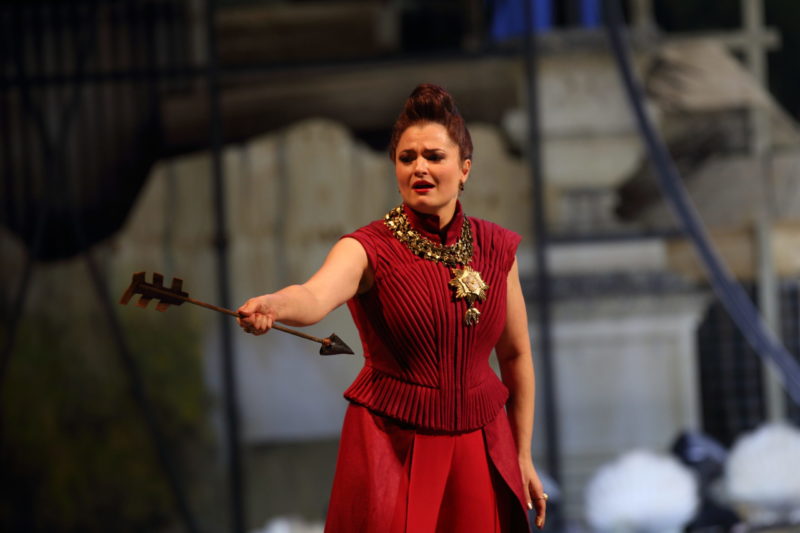
    Recent highlights include acclaimed debuts as Mélisande in Debussy’s Pelléas et Mélisande (her UK operatic debut) at the Longborough Festival Opera, directed by Jenny Ogilvie and conducted by Anthony Negus, as Elettra in Mozart’s Idomeneo with the Freiburger Barockorchester at Teatro Real in Madrid, Liceu in Barcelona, and at the Elbphilharmonie. She also performed as Piacere in Handel’s Il trionfo del Tempo e del Disinganno with the B’Rock Orchestra under René Jacobs at the Tongyeong International Music Festival, the Seoul Arts Center, and Tokyo Opera City. At the Staatsoper Berlin, she appeared as Kaiserin Arianna in Vivaldi’s Il Giustino as well as Micaëla in Bizet’s Carmen at the Oper Frankfurt. Further engagements brought her to the Salzburger Festspiele as Soprano I in Mozart’s Mass in C minor. She also sang Mahler’s Resurrection Symphony at the Gstaad Menuhin Festival under the direction of Jaap van Zweden.

    Over the past two seasons, Kasper performed the role of Isacco in Mysliveček’s impressive Abramo ed Isacco with Collegium 1704 under Václav Luks at the Rudolfinum in Prague and the Concertgebouw in Amsterdam.
    She recently made her Canadian debut with Handel’s Aci, Galatea e Polifemo with the Arion Baroque Orchestra in Montréal, followed by performances with the Kammerorchester Basel in Basel and Vienna.
    Her oratorio work includes an extensive tour with Bach’s St. Matthew Passion with the Freiburger Barockorchester under Francesco Corti through Europe and South Korea, Bach’s Christmas Oratorio at the Wiener Konzerthaus with the Wiener Symphoniker and in the Isarphilharmonie in Munich under Patrick Hahn, Haydn’s Creation at the Tonhalle Zürich, and The Seven Last Words of Our Saviour on the Cross with the RIAS Kammerchor at the Konzerthaus Berlin, which will be released on CD.
    ©Martin Müller

    Upcoming Season

    This season, the singer has numerous important operatic and concert engagements planned. She will make two significant role debuts: as Cleopatra in Handel’s Giulio Cesare, returning to her home opera house, and as Donna Anna in Mozart’s Don Giovanni at the Vlaamse Opera in Antwerp and Ghent. She will also once again perform as Arianna in Vivaldi’s Il Giustino with the Freiburger Barockorchester under René Jacobs on tour, with stops in Valencia, at the Teatro Real Madrid, the Konzerthaus Freiburg, at the Musikfestival Heidelberger Frühling, and at DeSingel in Antwerp. In Handel’s Aci, Galatea e Polifemo, she will take on the role of Aci at the Händel-Festspiele in Halle as well as in Barcelona and Seville. Further concerts include Brahms’ German Requiem with the Bochumer Symphoniker and Bach’s St. John Passion with the Orquesta Filarmónica de Gran Canaria under the direction of Karel Mark Chichon.

    Opera Engagements
    (c) Monika Rittershaus

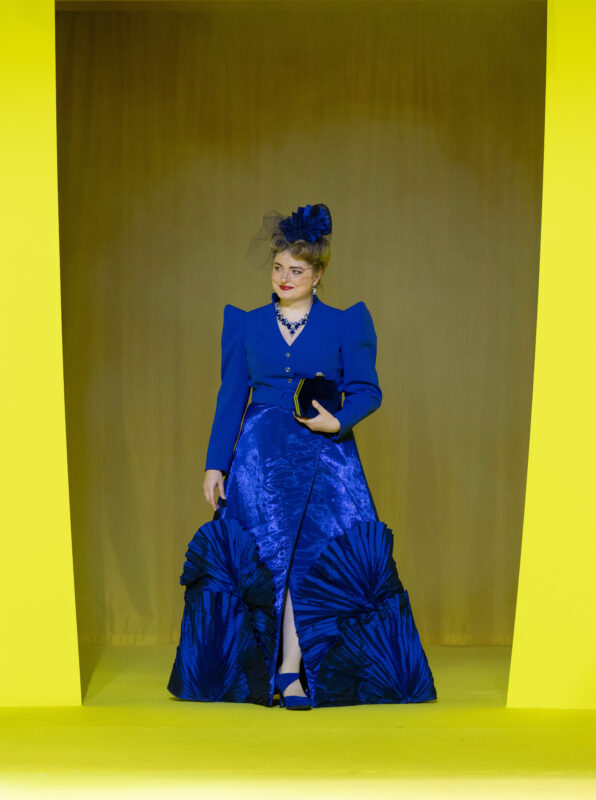
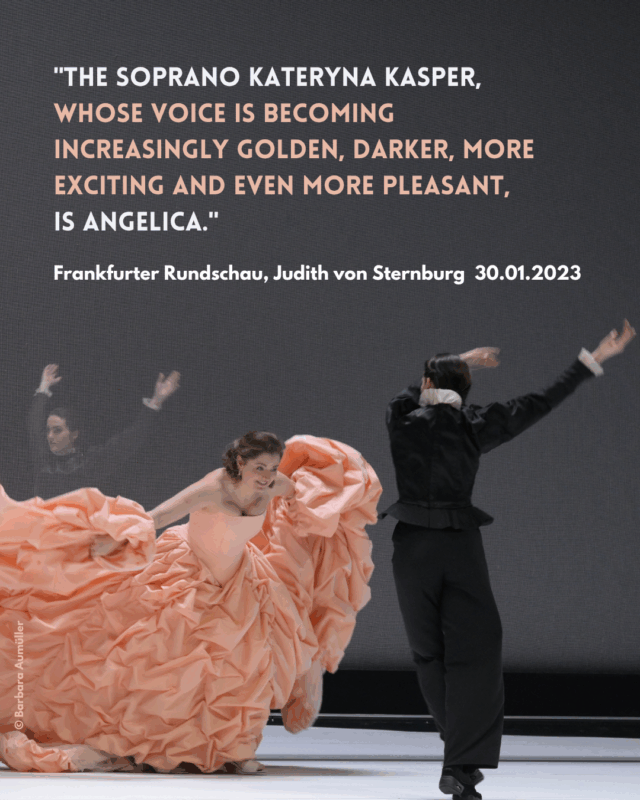
    From 2014 to 2024, Kasper was a member of the ensemble at her home opera house, Oper Frankfurt, where she embodied a wide range of roles spanning from Baroque to contemporary opera. These included Anima in Cavalieri’s Rappresentazione di anima e di corpo, Giacinta in Cesti’s L’Orontea, Romilda, Oriana, Angelica, and Tigrane in Handel’s Xerxes, Amadigi, Orlando, and Radamisto; Angelica in Vivaldi’s Orlando furioso; Susanna, Pamina, Zerlina, Venus in Mozart’s Le nozze di Figaro, Die Zauberflöte, Don Giovanni, Ascanio in Alba; Antonida in Glinka’s Ivan Susanin; the title role in Flotow’s Martha; Gretel in Humperdinck’s Hänsel und Gretel; Nannetta in Verdi’s Falstaff; Sophie in Strauss’ Der Rosenkavalier; Titania in Britten’s A Midsummer Night’s Dream, and the Young Woman in the world premiere of Der Goldene Drache – a role written for her by Péter Eötvös and presented in co-production with Ensemble Modern. She has also performed operetta roles such as Countess Anastasia in Kálmán’s Die Csárdásfürstin and Valencienne in Lehár’s Die lustige Witwe.

    Operatic engagements have taken Kateryna Kasper to the festivals in Edinburgh, Bregenz, Bergen, and St. Margarethen, as well as to the Los Angeles Opera, the Staatsoper Berlin and the Nationaltheater Mannheim. On a European tour with the B’Rock Orchestra under René Jacobs, she performed the role of Orasia in Telemann’s Orpheus, with performances at the Liceu in Barcelona and the Concertgebouw in Amsterdam.
    Concert and Lieder

    Kateryna Kasper has a wide-ranging concert repertoire from Bach’s oratorios and passions to Mahler’s symphonies, and from Haydn and Mozart to Brahms, Mendelssohn, Dvořák, Poulenc, and Henze.

    She has collaborated with many leading orchestras and ensembles, including AKAMUS, Collegium 1704, Ensemble Modern, Holland Baroque, Konzerthausorchester Berlin, London Philharmonic Orchestra, Orquestra Gulbenkian Lisbon, Orquestra Sinfónica do Porto, and Turku Philharmonic Orchestra.

    She has appeared at the Bachwoche Stuttgart, the Grafenegg Festival, the Händel-Festspiele in Halle and Karlsruhe, the Klangvokal Musikfestival Dortmund, the Telemann Festival Magdeburg, and the Tongyeong International Music Festival. Concert appearances have taken her to renowned venues such as the Alte Oper Frankfurt, the Elbphilharmonie Hamburg, the Philharmonie in Cologne, Moscow, and Paris, the Seoul Arts Center, the Théâtre des Champs-Elysées in Paris, and Tokyo Opera City.

    She devotes herself to art song with great passion, focusing on German and Ukrainian Romantic repertoire. Together with pianist Dmitry Ablogin, she recorded an album of songs by the Mendelssohn siblings, including several world premiere recordings of Fanny Hensel.

    Collaborations

    She has been working with conductors such as Ivor Bolton, Roland Böer, Hubert Buchberger, Constantinos Carydis, Bjarte Eike, Simone di Felice, Bernhard Forck, Michael Form, Howard Griffiths, Patrick Hahn, James Hendry, Michael Hofstetter, Karsten Januschke, Julia Jones, Hartmut Keil, Eun Sun Kim, Václav Luks, Giuseppe Mentuccia, Fausto Nardi, Geoffrey Paterson, Raphaël Pichon, Christoph Poppen, Hans-Christoph Rademann, Helmuth Rilling, Michael Schneider, Steven Sloane, Andreas Spering, Nathalie Stutzmann, Constantin Trinks, Felice Venanzoni, Sebastian Weigle, Sebastian Zierer, Jaap van Zweden.

    Equally fruitful collaborations she enjoyed with stage directors such as Andrea Bernard, Nina Brazier, Brigitte Fassbaender, Barbora Horáková, Claus Guth, Ted Huffman, Netia Jones, Dorothea Kirschbaum, Barrie Kosky, Tilmann Köhler, Harry Kupfer, Jim Lucassen, Hendrik Müller, Jenny Ogilvie, Cornelius Obonya, Carolin Pienkos, Hans Walter Richter, Victoria Stevens, Elisabeth Stöppler, and Walter Sutcliffe.

    Special musical relationships connect her with the conductor René Jacobs and her chamber music partners, the Frankfurt ensemble théâtre sans rideau, Trio Vivente (Kristin von der Goltz, Anne Katharina Schreiber, Jutta Ernst), the Eliot Quartet, and pianists Dmitry Ablogin, Hilko Dumno, Marcelo Amaral, Tobias Truniger and Lars Jönsson.

    Discography

    Kasper’s debut album ‘O wüßt ich doch den Weg zurück …’ (Ah! If I but Knew the Way Back …) features romantic songs about childhood and fairy tales, recorded with Hilko Dumno on the historic Steinway of Richard Wagner in Bayreuth. In 2022, she released recordings of Shostakovich and Weinberg cycles with Trio Vivente, Weber’s Freischütz with the Freiburg Baroque Orchestra under René Jacobs (awarded the Opus Klassik), and her second lieder album ‘Ein süßes Deingedenken’ (A Tender Memory of Thee), featuring songs by Fanny and Felix Mendelssohn with Dmitry Ablogin playing on a historic fortepiano from 1835.

    Education and Awards

    Kasper studied with Raisa Kolesnik at the Prokofiev Music Academy in Donetsk, Ukraine, and subsequently in Nuremberg with Edith Wiens and in Frankfurt with Hedwig Fassbender, supported by a DAAD scholarship. She won the prestigious Mirjam-Helin International Singing Competition in Helsinki in 2014, preceded by prizes at the IVC ’s-Hertogenbosch (2010) and The Queen Sonja International Music Competition in Oslo (2011).

    ©Andreas Kasper


Repertoire
Repertoire Opera
Beethoven, Ludwig van (1770–1827)
  • Fidelio / Leonore (Marzelline*)
Bizet, Georges (1838–1875)
  • Carmen (Micaëla)
Britten, Benjamin (1913–1976)
  • A Midsummer Night’s Dream (Tytania, Helena*)
Cavalieri, Emilio de’ (c. 1550–1602)
  • Rappresentazione di Anima e di Corpo (Anima)
Debussy, Claude (1862–1918)
  • Pelléas et Mélisande (Mélisande)
Dvořák, Antonín (1841–1904)
  • Rusalka (Rusalka*)
Eötvös, Peter (1944-2024)
  • Der goldene Drache (2014) (Young woman / The little Chinese)
Gluck, Christoph Willibald (1714–1787)
  • Orfeo ed Euridice (Euridice)
Händel, Georg Friedrich (1685–1759)
  • Aci, Galatea e Polifemo (Aci)
  • Alcina (Alcina*)
  • Amadigi di Gaula (Oriana, Melissa*)
  • Ariodante (Ginevra*)
  • Giulio Cesare (Cleopatra)
  • Orlando (Angelica)
  • Partenope (Partenope*)
  • Radamisto (Tigrane, Polissena*)
  • Rodelinda (Rodelinda*)
  • Rinaldo (Armida*, Almirena*)
  • Saul (Michal)
  • Semele (Semele*)
  • Serse (Romilda)
  • Teseo (Agilea)
Humperdinck, Engelbert (1854–1921)
  • Hänsel und Gretel (Gretel)
Kálmán, Emmerich (1882–1953)
  • Die Csárdásfürstin (Countess Stasi)
Lehár, Franz (1870–1948)
  • Die lustige Witwe (Valencienne, Hanna Glawari*)
Monteverdi, Claudio (1567–1643)
  • L’incoronazione di Poppea (Poppea*)
Mozart, Wolfgang Amadeus (1756–1791)
  • Ascanio in Alba (Venere, Silvia*)
  • Così fan tutte (Fiordiligi*, Despina*)
  • Die Zauberflöte (Pamina)
  • Don Giovanni (Zerlina, Donna Anna, Elvira*)
  • Idomeneo (Ilia*, Elettra)
  • Il re pastore (Elisa*)
  • Le nozze di Figaro (Susanna, La Contessa di Almaviva*)
  • La clemenza di Tito (Vitellia*)
  • Mitridate, re di Ponto (Aspasia*)
Pergolesi, Giovanni Battista (1710–1736)
  • La serva padrona (Serpina)
Poulenc, Francis (1899–1963)
  • Les mamelles de Tirésias (Thérèse / Tirésias*)
Puccini, Giacomo (1858–1924)
  • Gianni Schicchi (Lauretta)
  • La Bohème (Mimi*, Musetta)
Purcell, Henry (1659–1695)
  • Dido and Aeneas (Dido*)
Scarlatti, Alessandro (1660–1725)
  • La Colpa, Il Pentimento, La Grazia (La Colpa)
Schumann, Robert (1810–1856)
  • Genoveva (Genoveva*)
Stradella, Alessandro (1639–1682)
  • San Giovanni Battista (Figlia*)
Strauss, Richard (1864–1949)
  • Der Rosenkavalier (Sophie, Die Feldmarschallin*)
Strawinsky, Igor (1882–1971)
  • The Rake’s Progress (Anne*)
Telemann, Georg Philipp (1681–1767)
  • Die wunderbare Beständigkeit der Liebe, oder Orpheus (Orasia)
Verdi, Giuseppe (1813–1901)
  • Falstaff (Nannetta, Alice Ford*)
Vivaldi, Antonio (1678–1741)
  • Il Giustino (Arianna)
  • Orlando furioso (Angelica)
Weber, Carl Maria von (1786–1826)
  • Der Freischütz (Ännchen, Agathe*)

* – Repertoiremöglichkeiten

Repertoire Konzert
Bach, Carl Philipp Emanuel (1714–1788)
  • Hebt an, ihr Chöre der Freuden – Oratorio of the Kapitänsmusik1780 for soloists, choir, and orchestra (Hammona)
Bach, Johann Sebastian (1685–1750)
  • Also hat Gott die Welt geliebt, BWV 68
  • h-Moll Messe, BWV 232 (Soprano I)
  • Ich hatte viel Bekümmernis, BWV 21
  • Jauchzet Gott in allen Landen, BWV 51
  • Johannes-Passion, BWV 245
  • Magnificat
  • Matthäus-Passion, BWV 244
  • Mein Herze schwimmt im Blut, BWV 199
  • Weihnachts-Oratorium, BWV 248
  • Wachet auf, ruft uns die Stimme, BWV 140
  • Was Gott tut, das ist wohlgetan, BWV 99
Beethoven, Ludwig van (1770–1827)
  • Trio for soprano, tenor and bass with orchestra „Tremate, empi tremate“, Opus 116
Brahms, Johannes (1833–1897)
  • Ein deutsches Requiem, Op. 45
Buxtehude, Dieterich (ca. 1637–1707)
  • Also hat Gott die Welt geliebet, BuxWV 5
Dvořák, Antonín (1841–1904)
  • Requiem, Op. 89
  • Stabat Mater, Op. 58
Graupner, Christoph (1683–1760)
  • Mein Herz schwimmt in Blut, GWV 1152/12b
Händel, Georg Friedrich (1685–1759)
  • Lucrezia, HWV 145, solo cantata
  • Messiah, HWV 56
  • Saul, HWV 53 (Michal)
Hasse, Johann Adolph (1699–1783)
  • Laudate pueri, Psalm 112 (soprano I)
Haydn, Joseph (1732–1809)
  • Die Schöpfung
  • Die sieben letzten Worte unseres Erlösers am Kreuze, Hob. XX/1:A
  • Miseri noi, misera patria – Solo cantata for soprano and orchestra
  • Missa in angustiis/Nelson-Messe, Hob. XXII: 11, d-Moll
Henze, Hans Werner (1926–2012)
  • Being beauteous, Cantata for coloratura soprano, harp and four cellos
Mahler, Gustav (1860–1911)
  • Symphony No. 2
  • Symphony No. 4
Mendelssohn, Felix (1809–1847)
  • Elias, Op. 70 (Soprano I, Witwe)
  • Hör mein Bitten, Hymne nach Psalm 55, 2-8, WoO 15
  • Paulus, Op. 36
Mozart, Wolfgang Amadeus (1756–1791)
  • „Ch’io mi scordi di te? … Non temer, amato bene“, K. 505 for soprano, piano obbligato and orchestra
  • Die Krönungsmesse in C-Dur, KV 317
  • Exsultate, jubilate, KV 165 – Motet for soprano and orchestra
  • Große Messe in c-Moll, KV 427 (Soprano I)
  • Laudate Dominum aus Vesperae solennes de Confessore, KV 339
  • Requiem, KV 626
Mysliveček, Josef (1737 –1781)
  • Abramo ed Isacco (Isacco)
Pergolesi, Giovanni Battista (1710–1736)
  • Salve Regina c-Moll
  • Stabat Mater
Poulenc, Francis (1899–1963)
  • Gloria, FP 177 (1959) *
  • Stabat Mater, FP 148 (1950) *
 
Schubert, Franz (1797–1828)
  • Mass No. 5 in A flat major, D 678
  • Salve Regina in A major, Op. 153 for soprano and string orchestra
Schumann, Robert (1810–1856)
  • Scenes from Goethe’s Faust, WoO 3 (Gretchen, Soprano Solo III, Nr. 4)
Telemann, Georg Philipp (1681–1767)
  • Seele, lerne dich erkennen, TWV 1:1258 from the Harmonischen Gottesdienst
  • So kömmt die kühne Tapferkeit (Serenata of the Kapitänsmusik 1736)
Vivaldi, Antonio (1678–1741)
  • Mottetto In furore iustissimae irae, RV 626
Repertoire Lied
Argento, Dominick (1927–2019)
  • Six Elizabethan Songs (selection)
Barber, Samuel (1910–1981)
  • Nuvoletta, Op. 25 from „Finnegans Wake“
Barvinsky, Vasyl (1888–1963) 
  • Oy lyuli, lyuli, moya dyntyno
Beethoven, Ludwig van (1770–1827)
  • Auswahl
Bortkevych, Serhiy (1877–1952)
  • Sept poésies de Paul Verlaine op. 23 (1. La lune blanche 2. Green 3. Un grand sommeil noir 4. Le piano que baise une main frêle 5. Il pleure dans mon cœur 6. La femme et la chatte 7. Le ciel est, par dessus le toit)
Brahms, Johannes (1833–1897)
  • Feldeinsamkeit, Op. 86, Lerchengesang, Op. 70, Liebeslieder-Walzer, Op. 52, Mädchenfluch, Op. 69, Mädchenlied, Op. 107, Meine Liebe ist grün, Op. 63, Neue Liebeslieder-Walzer, Op. 65, O wüsst’ ich doch den Weg zurück, Op. 63, Quartette, Op. 31, 92 (selection),Vergebliches Ständchen, Op. 84, Wie Melodien zieht es, Op. 105
Debussy, Claude (1862–1918)
  • Quatre chansons de jeunesse (Pantomime, Clair de lune, Pierrot, Apparition), Romance L’âme évaporée est souffrante (1891) (Bourget), Romance Silence ineffable de l’heure (1883) a.o.
Gieseking, Walter (1895–1956)
  • 21 Kinderlieder (selection)
Glière, Reinhold (1875–1956)
  • In der Ferne, Auf den Blumen zittern Träne
  • Vdali bezbrezhnoi, Na tsvetakh drozhat slezinki u.a.
Grieg, Edvard (1843–1907)
  • Sox songs Op. 48
Hahn, Reynaldo (1874–1947)
  • À Chloris and other songs
Haydn, Franz Joseph (1732–1809)
  • Scottish songs (selection)
Hensel (Mendelssohn), Fanny (1805–1847)
  • Op. 1: Schwanenlied, Op. 4: Nacht, Im Herbst, Op. 7: Harfners Lied, Nachtwanderer, Op. 8: Ach, die Augen sind es wieder, Achmed an Irza / Im Garten, Op. 9: Die Mainacht, Sehnsucht (“Ich weiß ein Tal”), Traum, Über allen Gipfeln ist Ruh, Op. 10: Bergeslust, Nach Süden, Wenn ich mir in stiller Seele, Vorwurf (Op. posth. 10), Op. 18: Dämmrung senkte sich von oben, H-U 66: Die furchtsame Träne, H-U 213: Geräusch, Wo kommst du her?, H-U 378: Anklänge (Vöglein in den sonn’gen Tagen, Ach! wie ist es doch gekommen, Könnt’ ich zu den Wäldern flüchten)
Hindemith, Paul (1895–1963)
  • Das Marienleben (1948 version)
Ippolitow-Iwanow, Mikhail (1859–1935)
  • Five Japanese poems Op. 60
Liszt, Franz (1811–1886)
  • Oh, quand je dors, Enfant, si j ́étais roi
Liudkevych, Stanislav (1879–1979)
  • Odna pisnya holosnenka a.o.
Loewe, Carl (1796–1869)
  • Der Nöck Op. 129, Ach neige du Schmerzenreiche op. 9
Lysenko, Mykola (1842–1912) 
  • Knyazhna a.o.
Medtner, Nikolai (1880–1951) 
  • Angel, Op. 36, Babochka, Op. 28, Bessonnitsa, Op. 37, Ispanskiy romans, Op. 36, Lish rozy uvyayut, Op. 36, Muza, Op. 29, Nash vek, Op. 45, O chem ty voesh, vetr nochnoy?, Op. 37, Slezy, Op. 37, Sumerki, Op. 24, Zimniy vecher, Op. 13, Meeresstille, Op. 15, Winternacht, Op. 46
Mendelssohn-Bartholdy, Felix (1809–1847)
  • Altdeutsches Frühlingslied, Op. 86, Andres Maienlied (Hexenlied), Op. 8, Auf Flügeln des Gesanges, Op. 34, Blumenstrauß, Op. 47, Des Mädchens Klage, WoO 23, Die Liebende schreibt, Op. 86, Frühlingslied, Op. 47, Nachtlied, Op. 71, Neue Liebe, Op. 19, Schilflied, Op. posth. 71, Suleika, Op. 34, Venetianisches Gondellied, Op. 57
Messiaen, Olivier (1908–1992)
  • Résurrection aus Chants de Terre et de Ciel (selection)
Mozart, Wolfgang Amadeus (1756–1791)
  • Abendempfindung an Laura, K. 523, Das Veilchen, KV 476 and other songs
Mussorgskij, Modest (1839–1881)
  • Detskaja (Nursery)
Poulenc, Francis (1899–1963)
  • <Fiançailles pour rire, FP101
Prokofjew, Sergei (1891–1953)
  • Boltunia/ The Chatterbox from Three Children’s Songs, Oр. 68
Purcell, Henry (1659–1695) 
  • If Music be the food of love, Music for a while, Nymphs and shepherds come away, Tell me, some pitying angel (The Blessed Virgin’s Expostulation)
Rachmaninow, Sergei (1873–1943)
  • Krisolov, Op. 38, Ne poy krasavitsa pri mne, Op. 4, Son, Op. 8, U moego okna, Op. 26, Zdes’ khorosho, Op. 21, Vokalise, Op. 34 and other songs
Reimann, Aribert (1936–2024)
  • Gib mir den Apfel aus Kinderlieder, ED 7682
Rimskij-Korsakow, Nikolai (1844–1908)
  • Op. 2: Plenivshis’ rozoy solovey, Op. 27: Echo, Gornimi ticho letela duscha nebesami, Prosti, ne pomni dnej padenja, Ty i Vy, Op. 42: Redeet oblakov letuchaya gryada, Op. 43: Zvonche zhavoronka pen’e, Op. 56: Nympha u.a.
Roslavets, Nikolai (1881–1944)
  • Bogomater‘! Ego oseni, Cvetok, Ja segodnja ne pomnju, c`to bylo vc`era, Kak mlec`nyj put‘, ljubov‘ tvoja, Kuk, Margaritki, Petukhi, Posmotri, stalo nebo šire, Sbylos‘ proroc`estvo moë, Vec`er, Vesennij veter, Zarnica, Zaklinanie
Schostakowitsch, Dmitri (1906–1975)
  • Romance Suite for Soprano and Piano Trio op. 127
Schubert, Franz (1797–1828)
  • Adelaide, Op. 14, An den Mond, Op. 80, An die Musik, Op. 88 Auf dem Wasser zu singen, Op. 72, Der Hirt auf dem Felsen, Op. posth. 129, Der Wanderer, Op. 24, Die Forelle, Op. 32, Die junge Nonne, Op. 78, Erlkönig, D 328, Gretchen am Spinnrade, Op. 2, Im Frühling, Op. 4, So lasst mich scheinen, bis ich werde, Op. 80, Suleika, Op. 14, Suleika, Op. 31
Schumann, Clara (1819–1896)
  • Six songs, Op. 13 (Ich stand in dunklen Träumen, Sie liebten sich beide, Liebeszauber, Der Mond kommt still gegangen, Ich hab‘ in deinem Auge, Die stille Lotosblume), Lorelei Op. 53, Der Wanderer
Schumann, Robert (1810–1856)
  • Aufträge, Op. 77, Dichterliebe, Op. 48, Die Meerfee, Op. 39, Frauenliebe und –leben, Op. 42, Kennst du das Land, Op. 79, Lied der Suleika, Op. 25, Liebeslied, Op. 51, Mein schöner Stern!, Op. 101, Mondnacht, Op. 39, Myrthen, Op. 25 (selection), Sehnsucht, Op. 51, Singet nicht in Trauertönen, Op. 98A/7
Stepovy, Yakiv (1883-1921)
  • Ni, ne spivay pisen veselykh a.o.
Strauss, Richard (1864–1949)
  • Die Nacht, Op. 10, Die Vier letzten Lieder, Mädchenblumen, Op. 22, Ständchen, Op. 17, Wiegenlied, Op. 41 und andere Lieder
Tschaikowski, Pjotr (1840–1893)
  • Otchego, Op. 1, Kolybelnaya, Op. 72 u.a.
Trad. (Ukrainian and Russian folk songs)
Weinberg, Mieczysław (1919–1996)
  • Jü dische Lieder/ Kinderlieder Op. 13 for soprano and piano trio
Wolf, Hugo (1860–1903)
  • Mignon Gesänge (Heiß mich nicht reden, Nur wer die Sehnsucht kennt, So laßt mich scheinen, bis ich werde, Kennst Du das Land), Die Bekehrte, Die Spröde, Frühling übers Jahr, Verborgenheit, Goethe-Lieder aus dem West-östlichen Divan (Nimmer will ich dich verlieren, Als ich auf dem Euphrat schiffte, Hoch beglückt in deiner Liebe)/li>

Eine Nachricht senden